A sea you don’t have to swim in — Surfyy Beach, Yangyang
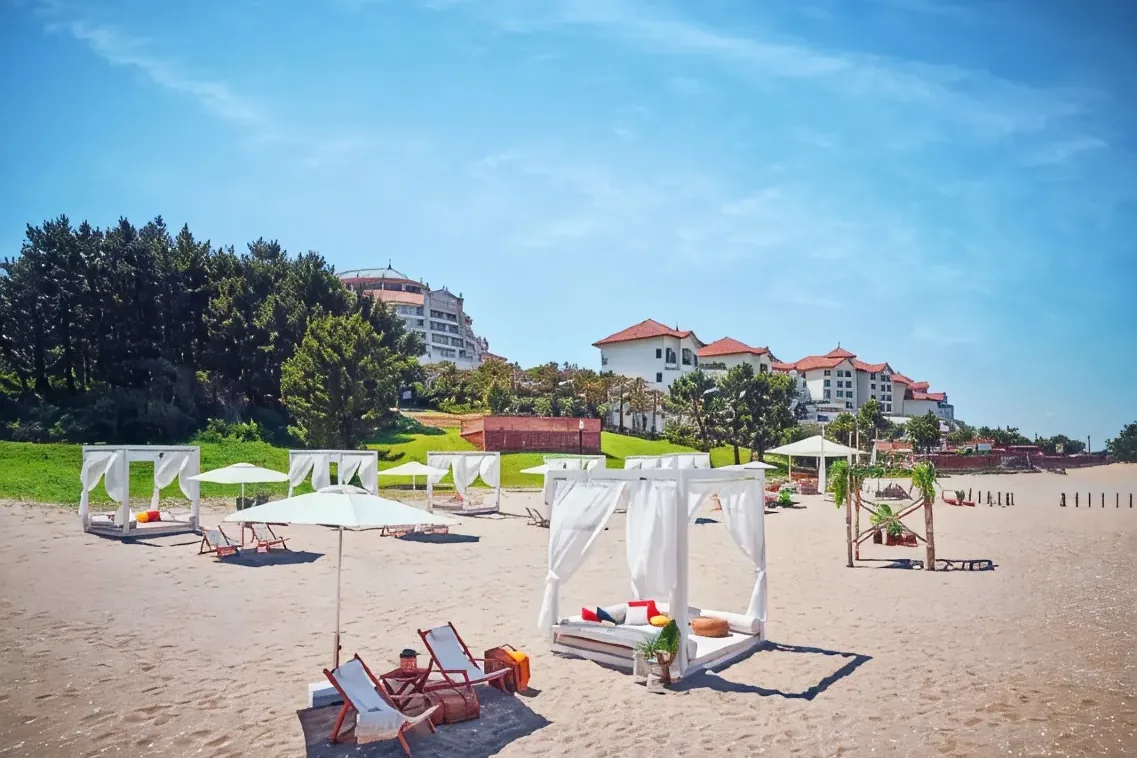
Image: Trip.com
The water off Hajodae in Yangyang catches good waves. In summer Surfyy Beach fills with surfers.
You don’t have to go in. Sitting on the deck watching people wait for a set is enough to pass an afternoon. Looking at the sea has always been a legitimate way of being at the sea.
The waves on the east coast come in steadily. Watch for a few minutes and your breathing falls into the rhythm without you deciding to.
Recovery isn’t a thing you do. That’s easier to accept in front of the ocean.
Surfyy Beach is a dedicated surfing beach on Hajodae shore in Yangyang, Gangwon Province. There are decks, seating and parasols, so you can be there without entering the water. Swimming often isn’t advisable while you’re recovering — this beach still works when you stay on land. A day spent going to the sea without going into it. That’s what this route assumes.
Does a trip to the beach still work if you don’t swim?
It’s easy to assume that going to the coast means getting in the water. While you’re recovering that’s frequently not possible — a wound that hasn’t closed, an area that mustn’t be exposed to sun or salt water.
That’s why this beach is on the list. Surfyy Beach gives a lot of space to people who aren’t going in. Decks and seating, a café, parasols, plenty of places to watch from. Watching the surfers counts as something to do.
You can watch waves for longer than you’d expect, because no two arrive the same way. After ten minutes you stop checking the time.
In short Surfyy Beach is a dedicated surfing beach at Hajodae, Hyeonbuk-myeon, Yangyang-gun, Gangwon Province, with decks, seating and parasols provided for visitors who aren’t entering the water. Spending time there without swimming is entirely practical. Whether the treated area can be exposed to sun or salt water depends on your own recovery, so confirm with the clinic that treated you before deciding how to visit.
Is walking on sand harder than it looks?
This one gets overlooked. Sand gives underfoot, so the same distance costs considerably more effort than level ground. While you’re recovering the difference is noticeable.
At Surfyy Beach a paved route runs from the car park to the deck. You can reach the sea without crossing sand at all, which makes a real difference to a visitor who’s recovering.
If you do want to walk on the beach, the wet band where the waves have just pulled back is firmer and much easier going. But avoid it if the treated area shouldn’t touch water.
The sea is still the sea from a distance.
In short Walking on sand requires more effort than walking the same distance on firm ground, because the surface gives underfoot. At Surfyy Beach a paved route connects the car park to the beach deck, so the sand can be avoided entirely. Wet sand is firmer than dry and easier to walk on, but should be avoided if contact with sea water is restricted.
How should you fill a day at Hajodae?
You don’t have to. There’s nothing on this route you’re required to see.
If you want an outline: arrive late morning, spend the day at the beach, head to the hotel in the afternoon. Cafés and restaurants around Hajodae are within walking distance of one another, so the car can stay where it is.
Get back before sunset. Fatigue often arrives suddenly in the early evening while you’re recovering, even on days that felt fine. Leaving the back half of the day empty is the safer arrangement.
The sea will still be there tomorrow.
In short Cafés and restaurants around Hajodae beach are clustered within walking distance, so a day there doesn’t require repeated driving. Fatigue can accumulate in the late afternoon during recovery, so leaving the latter part of the day unscheduled and returning to the accommodation early evening is the less demanding arrangement.
Frequently asked questions
Can I go to Surfyy Beach without surfing?
Yes. Decks, seating and a café mean you can simply be there. Lessons and equipment hire are available only if you want them.
Can I go in the sea after a procedure?
It depends on the procedure and your recovery, and it’s generally not advised while a wound is still healing. Recovery Route doesn’t provide medical guidance — please ask the clinic that treated you.
When is the best time to visit?
May to October is the comfortable window. High summer is crowded with strong sun, so early June or September is easier if you’re recovering. Winter brings hard wind, and we’d suggest an indoor-led itinerary.
How far is it from Seoul?
About two and a half hours by car on the Seoul–Yangyang expressway. Public transport requires a bus to Yangyang and a connection towards Hajodae, so a hire car is simpler.
How should I handle sun protection?
Beaches reflect light, so you’re exposed to UV even in shade. Bring a hat and long sleeves. Whether you can use sunscreen depends on the state of the treated area, so check in advance.
What waves do is simple. Arrive, withdraw, arrive again.
Recovery goes much the same way. Better, then swollen again, then slightly better. The fact that it doesn’t improve in a straight line is what wears people down — and sitting in front of the water, that pattern starts to seem ordinary.
You don’t have to go in for it to be the sea.
Where to stay
Ilgiilhoe 48-21 Hajodae 2-gil, Hyeonbuk-myeon, Yangyang-gun, Gangwon · walking distance from Surfyy Beach
The name comes from tea ceremony — ichi-go ichi-e, the idea that this meeting will not come again, so give it your full attention. Every room has a tea set, and boiling the water and waiting for it to steep genuinely becomes the day’s itinerary. Concrete outside, timber within, and Hajodae beach through the window. Some rooms have baths, though hot water immersion isn’t always advisable depending on your procedure, so check before booking.
AffiliateBook — affiliate link
Recovery Route thinks constantly about what proper rest requires. We look for the calmest places we can find, and we note the walking distances, the shade, and where you can sit down.
This article is travel information, not medical advice. Confirm any procedure or aftercare with the clinic that treated you.