Woljeongsa Fir Forest Trail
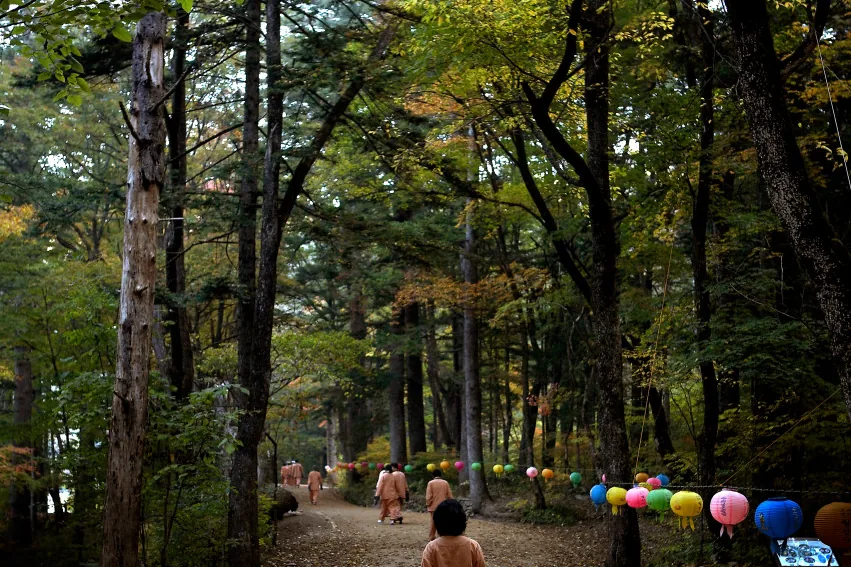
Odaesan, Pyeongchang · 1.9 km · Level ground · 40–60 minutes return
Past the gate that marks the start of the temple grounds, the sound changes before anything else does.
Traffic disappears. A stream picks it up from the left and follows you in. Look up and the crowns of the fir trees are touching overhead. It is mid-afternoon in high summer and the light is not reaching the ground. From here to Geumgang Bridge is 1.9 kilometres, and for all of it the forest stays quiet.
Why is this trail different?
Firs grow straight. They put their energy into height rather than width, so the forest above you is tall and dark. There are close to 1,700 of them along this stretch, most around a century old. A few have passed three hundred years.
The reason the trees are still standing is that this was the approach to a temple. Woljeongsa is said to have been founded roughly 1,400 years ago by the Silla-era monk Jajang, and during the Joseon dynasty this mountain held one of the archives where the royal records were kept. People came and went for centuries, but nobody cut the forest down. What survived is a walk where the shade never breaks, the ground stays flat, and turning back is easy.
What will you see?
The trail runs alongside the water the whole way. With the stream that close, the air is noticeably cooler in summer.
Partway along there is a large fir lying on its side with the root plate still attached — brought down by a typhoon years ago and left where it fell. It is the spot where people stand longest.
At the end of the trail you enter the temple courtyard, where an octagonal nine-storey stone pagoda stands. It dates from the Goryeo dynasty and is designated a National Treasure. In front of it, a stone bodhisattva kneels facing the pagoda.
Walk on past the courtyard and the Seonjae Trail begins, running all the way to Sangwonsa Temple. That one is a half-day walk, so it is worth deciding based on how you feel.
How far will you walk?
About 25 minutes one way — 40 minutes to an hour there and back.
There are no steps, and the surface is packed earth, so if you have had enough partway along you can simply turn around. You will not have missed the point of the trail by doing that.
The ground is compacted decomposed granite. With no stairs and no steep sections, a pushchair or wheelchair can get in, though the day after rain the surface softens and becomes hard going.
When should you go?
Early morning. The UV index is lower, and you are ahead of the tour groups. The trail is open at all hours, so you can be walking from first light.
Late spring and early summer are the easiest seasons. Autumn brings people for the colour, and winter brings them for the firs under snow.
Getting there
Woljeongsa Fir Forest Trail is a 20-minute drive from Jinbu station on the KTX line, which makes it a realistic day trip from Seoul.
There is not always a taxi waiting at Jinbu. Arranging your return in advance saves a long wait. If you are driving, park outside the entrance gate and walk in from there.
If you are recovering
If you have been told to stay out of direct sun, this is one of the few places where that does not mean giving up your time outdoors. The canopy holds the shade the whole way, and early morning is safer still.
Whether you can apply sunscreen to a treated area is a question your clinic answers differently depending on the procedure. Check first, and bring a hat and long sleeves either way.
The walk itself is low-intensity, but how much movement is appropriate for you is something only the clinic that treated you can say.
Where to stay nearby
We may earn a commission from bookings made through the link below.
InterContinental Alpensia Pyeongchang · 25-minute drive
The indoor facilities are extensive enough that an afternoon indoors does not have to mean an afternoon in your room. Worth considering if your restriction period runs long.
→ Affiliatehttps://www.trip.com/t/MoidhAcdgV2
FAQ
Is there an entrance fee? There is no separate charge for walking the trail itself; the fee applies when you enter the temple grounds. This has changed before, so it is worth checking before you go.
How early can I start walking? The trail is open at all hours, so you can walk from sunrise. Ticket office and car park hours are separate, though — if you are arriving early, check the parking arrangements first.
Can I get in with a wheelchair or pushchair? Yes, in the sense that there are no steps. But it is packed earth rather than paved, and wheels sink into it after rain.
Can I continue on to the Seonjae Trail? You can, but it is a different kind of walk. Seonjae follows the valley to Sangwonsa and takes half a day. Early in a recovery, turning back at the fir trail is the better call.
Is it worth going in the rain? Yes. The stream gets louder and the crowds thin out. Just wear something with grip — the surface gets slippery.
A closing note
There is nothing on this trail but trees, water and a path of packed earth.
When you are recovering, that is close to ideal. You can walk, stop, stand a while, turn back — and still not have missed anything.
This article is travel information, not medical advice. Confirm any procedure or aftercare with the clinic that treated you.