What happens in a Korean medicine clinic?
[유료 스톡] 클립아트코리아 구매 이미지
Open the door of a Korean medicine clinic and the smell arrives first — burning mugwort mixed with herbs simmering. What kind of place this is tends to be misunderstood, particularly by visitors. Most arrive assuming acupuncture and cupping are alternative therapies or a wellness service.
A Korean medicine doctor holds a national licence, obtained after a six-year degree and a state examination. Because Korea operates a dual medical system in which physicians and Korean medicine doctors are licensed separately, a Korean medicine clinic is a regulated medical facility rather than a spa. Acupuncture, moxibustion and cupping are substantially covered by national health insurance, and chuna manual therapy has been covered since 2019. Records are kept, diagnosis precedes treatment, and prescriptions carry responsibility.
Knowing this structure before you walk in makes for a noticeably different experience.
How does this differ from acupuncture elsewhere?
In most countries acupuncture is classified as complementary or alternative medicine. Qualification requirements vary widely, and in many places a short course is enough to practise.
Korea works differently. Becoming a Korean medicine doctor requires completing a six-year undergraduate or graduate programme and then passing a national examination, and the resulting licence sits at the same level as a physician’s. Hospitals have dedicated Korean medicine departments, and the Korean medicine hospital exists as its own category under medical law.
The neighbouring systems differ too. China’s zhongyi is closer to an integrated model alongside Western medicine, and Japan’s kampo is prescribed by physicians as part of conventional practice. Two parallel licences, as in Korea, is an unusual arrangement. Visitors from China and Japan sometimes see the same characters, picture a similar kind of medicine, and only later realise they’ve arrived somewhere slightly different.
The patient statistics reflect growing interest. Korean medicine consultations by international patients rose 84.6% in 2024 against the previous year, and Japanese patients rose 150.9% — the second highest growth rate after dermatology.
Nothing here will be said about efficacy. That belongs to the practitioner. What follows is simply a brief account of the order in which things happen once you’re through the door.
In short Korean medicine doctors complete a six-year programme at a college or graduate school of Korean medicine and obtain a licence by passing a national examination. Korea operates a dual medical system with separate licensing for physicians and Korean medicine doctors, and Korean medicine clinics and hospitals are classified as medical institutions under medical law. Acupuncture, moxibustion and cupping are substantially covered by national health insurance, and chuna manual therapy has been covered since 2019.
What does acupuncture actually feel like?
The needles are finer than expected. People say they’re like a hair, which is about right. They bear no relation to a hypodermic needle, and single-use sterile needles are now standard.
Insertion stings. The sensation doesn’t last, though, and usually resolves into something heavy or faintly electric. Less painful than simply present. And then you lie there for fifteen or twenty minutes.
That stretch is oddly unfamiliar. Because you can’t move with needles in place, there is genuinely nothing to do. Even reaching for a phone stops appealing. Spending fifteen minutes looking at a ceiling is rare enough in ordinary life that it feels long at first.
Moxibustion delivers heat by burning mugwort. The warmth builds gradually, and because it involves heat there is a risk of burns. If it feels too hot, don’t endure it — say so immediately.
Cupping draws the skin up using suction from a cup-shaped vessel. It leaves circular marks that last from a few days to a fortnight, which is worth calculating if you’re travelling. Marks on the back or shoulders show under short sleeves and swimwear, and more so if a hot spring is on the itinerary. Since shifting the timing solves it entirely, mention your plans at the start.
In short Acupuncture uses single-use sterile needles, typically retained for 15 to 20 minutes before removal. Insertion involves brief pain but this commonly resolves into a heavy or tingling sensation. Moxibustion applies thermal stimulation by burning mugwort and carries a risk of burns, so discomfort should be reported immediately. Cupping uses suction and leaves circular marks lasting from several days to around two weeks.
What should you mention before your visit?
This is the important part.
Disclose any procedure or surgery you’ve had recently. Needling or cupping near a treated area may not be appropriate, and moxibustion involves heat, which collides directly with healing skin. The instruction to avoid heat after a procedure applies here just the same.
Disclose everything you’re taking, too. Herbal and conventional medicine can interact. If you’re on anticoagulants or antiplatelets, whether cupping or wet cupping proceeds may change entirely.
And the reverse direction matters as well. Tell the clinic that treated you that you’ve started herbal medicine. Judgement is only accurate when both sides know — information held by one side alone functions much like no information at all.
Pregnancy or the possibility of it, bleeding tendencies and infectious conditions also change how treatment proceeds.
Say these things first, even if you aren’t asked.
In short Before visiting a Korean medicine clinic, disclose any recent procedure or surgery, all medication currently taken, possibility of pregnancy, bleeding tendency and any infectious condition. Acupuncture and cupping near a treated area, and moxibustion involving heat, may be restricted depending on healing status. Because herbal and conventional medicine may interact, the clinic that treated you should also be informed that you are taking herbal medicine.
Frequently asked questions
Does acupuncture hurt a lot?
Insertion stings briefly, and the needles are far finer than a hypodermic. Afterwards the sensation is usually heavy or slightly tingling. Say so in advance if you’re sensitive to pain.
How long do cupping marks last?
Generally a few days to around two weeks, varying with intensity and individual. Worth timing carefully if photographs or a hot spring are on the itinerary.
How is herbal medicine decided?
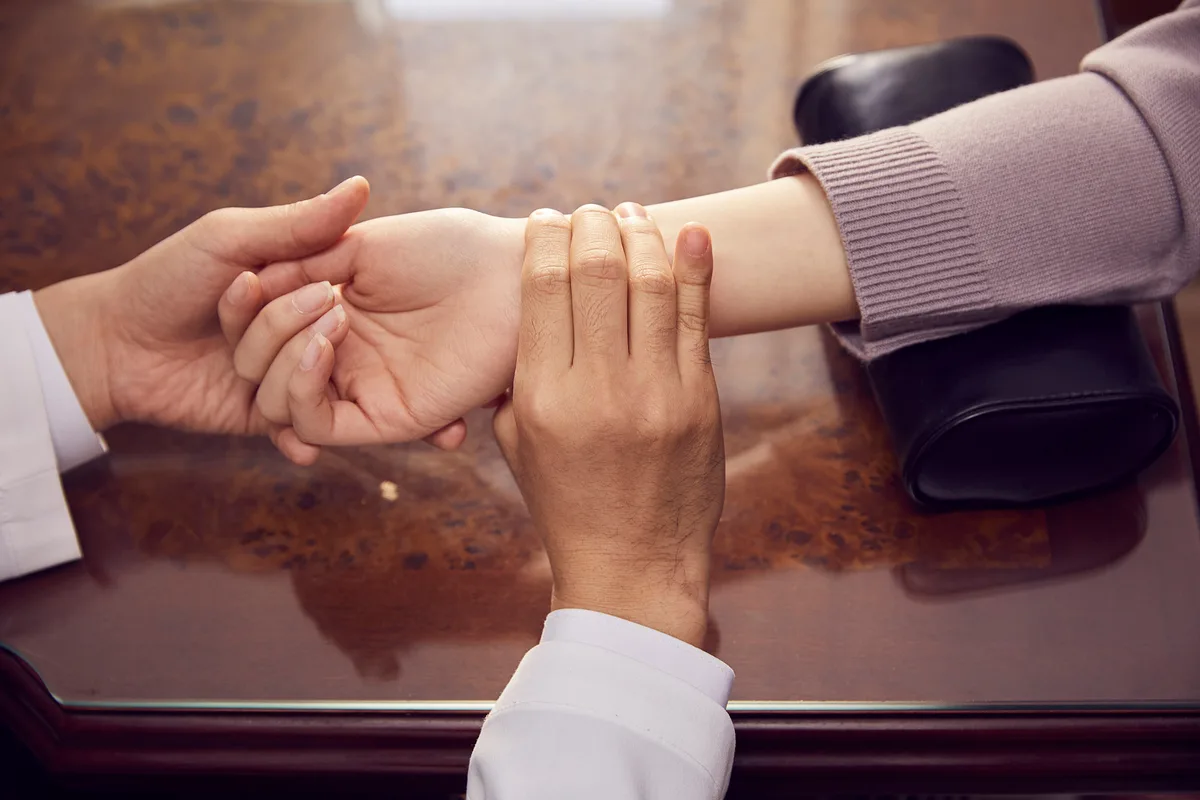
Not by buying a set product. It’s composed individually following questioning, pulse reading and tongue examination — which is why a first visit involves questions that seem unrelated to your symptoms. It comes as decoctions, pills or granules.
Can international patients be seen?
Yes. Clinics that receive international patients sometimes provide interpretation. Since consultation carries considerable weight here, communication matters — confirm interpretation when booking.
Can I take herbal medicine home with me?
It depends on the form and on your destination’s regulations. Documentation of ingredients or a prescription is sometimes required, so check both with the clinic and against your country’s import rules.
Fifteen minutes lying still with needles in place is dull at first. You could call it time in which nothing can be done and so nothing is — and that kind of time turns out to be surprisingly rare. You know you’re supposed to rest, and still you keep looking for something to do.
There is always a slight tension in entering an unfamiliar consulting room. Knowing in advance doesn’t make the needle sting less, but having some idea of what’s coming should make it a little easier. We hope this has helped you understand Korean medicine a little better.
Recovery Route thinks constantly about what proper rest requires. The Medical Guide describes how medical services work in Korea.
This article is travel information, not medical advice. Confirm any procedure or aftercare with the clinic that treated you.