Coming for the Food, Unable to Eat It
[유료 스톡] 클립아트코리아 구매 이미지
Look at anyone’s itinerary for Korea and half of it is food.
Tteokbokki, samgyeopsal, sundae-guk, malatang, chimaek. Where and what you’re eating effectively determines the route. There’ll be twenty pins saved on your map. And once the procedure is done, most of that list gets deleted.
What comes off the list, and why?
Spicy and hot food goes first.
Capsaicin stimulates pain receptors and raises both body temperature and blood flow. Hot food is heat by definition. If you were told to avoid high temperatures after your procedure, that instruction applies to food as well — more directly still for anything around the mouth.
Alcohol dilates blood vessels. It affects swelling and redness immediately, and if you’re taking painkillers or antibiotics it raises separate issues. Post-procedure guidance almost never omits alcohol.
Salt comes up often too. Sodium retains water and can prolong swelling. Korean food tends to be well seasoned, so this one catches a surprisingly wide net.
The same applies to anything requiring effort to chew, particularly after facial work. Tough meat, hard nuts, a burger you have to open wide for. Once you’ve deleted all of it there isn’t much left on the list. A large part of the trip can feel as though it has simply vanished.
Korea has a separate cuisine for when you’re unwell
This is where it can be seen differently.
Korea has food for people who are recovering as a category of its own. If you’re ill you eat juk, if you’re depleted you eat samgyetang, if your stomach is unsettled you eat kongnamul-guk.
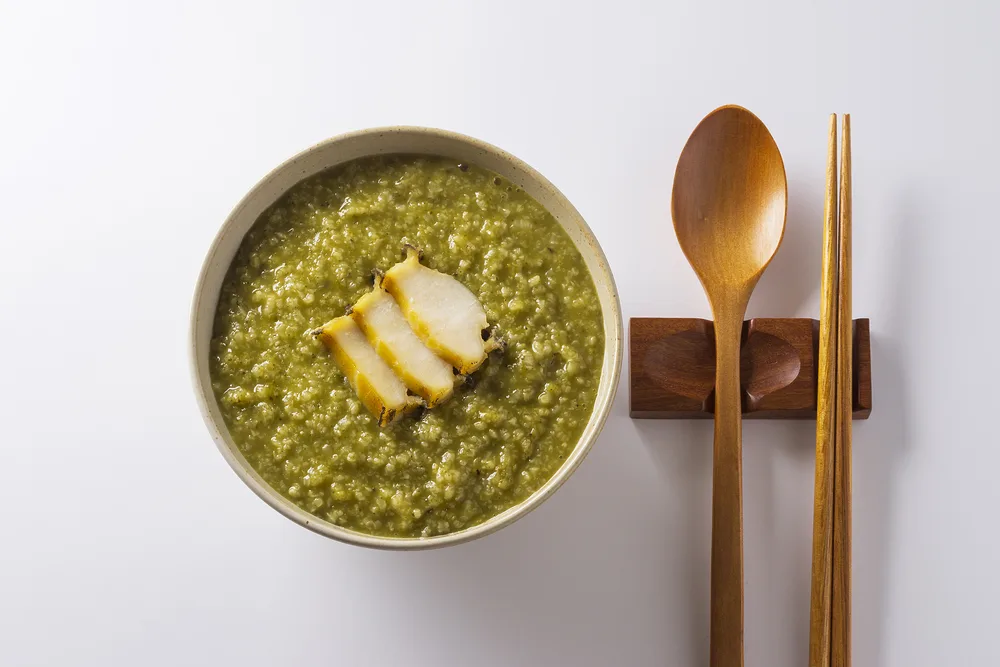
That there’s a porridge specialist in every city is genuinely unusual. Abalone, pumpkin, vegetable, beef. They open early, nobody thinks twice about someone eating alone, and you can ask for it not too hot. The bowl of porridge handed to you after a health screening comes from the same place.
Sundubu works well too. You can order it without the spicy sauce, it’s soft, and there’s protein in it. Steamed egg, pine nut porridge, braised lotus root, braised tofu — all of them near enough unseasoned.
Temple cuisine suits this period particularly well. It excludes the five pungent vegetables, so the flavours are mild and the cooking gentle. There are temple cuisine restaurants across Seoul and Gangwon. In Gangwon you’ll also find gamja-ongsimi and buckwheat dishes. Makguksu is served cold and lightly seasoned. Chodang sundubu is set with seawater rather than brine, which makes it softer still. Hwangtae haejang-guk is hot but not spicy, so once it cools it becomes a good option.
It all comes back, in order
The restrictions aren’t permanent, either.
There’s usually a sequence. Soft and lukewarm first, then room temperature, then warm food, then things with spice. Alcohol tends to return last.
That sequence and its timing vary by procedure, though. Don’t apply a period you read online — ask the clinic that treated you. And rather than “when can I eat normally?”, asking “when can I have spicy food, and when can I drink?” gets you a far better answer.
Mention your itinerary too. “I’m having Korean barbecue with a friend in a week — will that be all right?” will get you something specific.
You can always come back
You’ll be disappointed, of course. The restaurant you saw on Instagram, the alley a friend insisted on, the map you started saving months ago. Postponing it to the next trip isn’t easy.
But it settles once you think about the purpose of this trip. You came to recover, and that takes a few weeks. After that you can eat anything you like.
And what you do eat over these few days isn’t bad at all. A morning spent slowly working through a bowl of porridge while looking out of the window tends to stay with people — more than something eaten standing in a queue in a crowded alley.
Recovery Route thinks constantly about what proper rest requires. We look for the calmest places we can find, and we note the walking distances, the shade, and where you can sit down.
This article is travel information, not medical advice. Confirm any procedure or aftercare with the clinic that treated you.